Project Description


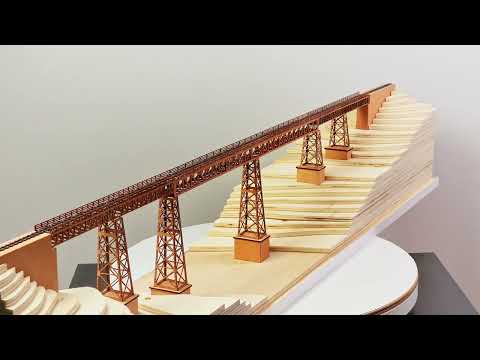


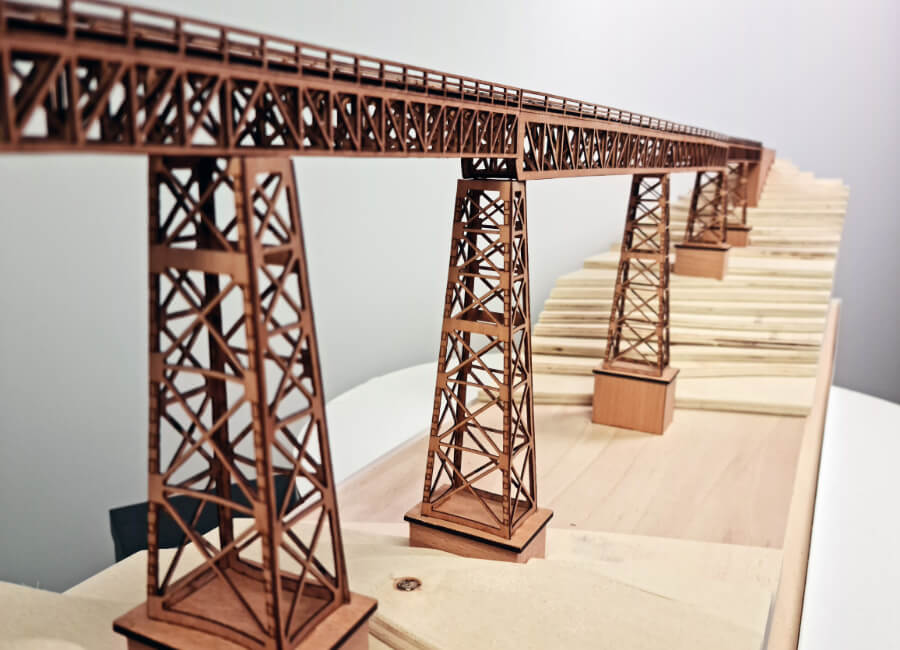

This is a meticulously crafted architectural model of a railway viaduct (or bridge), primarily constructed using laser-cut plywood. The model effectively combines structural detail with an abstract representation of the surrounding topography. The core element is the long, straight truss bridge, which is rendered in a dark reddish-brown color, stained plywood. The lattice-work of the steel truss structure is highly detailed, showcasing the precision achievable with laser cutting.
The bridge is supported by five tall, tapered pylons (piers), also built from the same dark material. These pylons rest on a smooth, light-colored wooden base that represents the valley floor the bridge spans. The model features an abstract but effective representation of the sloping terrain on either side of the valley.
The embankments and approach ramps are constructed from stacked layers of light-colored plywood, creating a contoured, terraced effect. This layering technique is typical in topographic models to illustrate height changes and cut-and-fill slopes.
The ends of the model show solid, vertical faces of plywood, clearly indicating where the bridge structure connects to the abutments and the main landmass. The difference in material and color between the light, layered terrain and the dark, intricate bridge emphasizes the engineering feat.
It is an excellent example of a technical and aesthetic model, successfully demonstrating the scale, structural complexity, and integration of a large civil engineering project—a railway viaduct—into its environment, all while showcasing the crisp detail made possible by laser-cut fabrication.
Models are innovative and high-performing tools in numerous industries, and they are used to highlight much more clearly certain elements that could not be otherwise noticed. They are made in three dimensions, offering a better overview than a drawn sketch, being able to represent in a realistic way, on a smaller scale, the design of the buildings, as well as the elements linked to the environment.
An architectural model is the best solution to solve numerous problems, but also to communicate more effectively with the other parties involved, thus offering architects and investors the opportunity to create a profitable facility that excels from all points of view.