
When marketing a new residential project, the focus is often placed on the individual apartment. However, savvy developers know that a home doesn’t exist in a vacuum. To truly understand a living space, one must see how it fits into the building’s ecosystem. This is where floor plan models scaled physical representations of an entire building level become indispensable.
These models serve as a vital bridge between complex architectural blueprints and the final vision of a home, providing a level of clarity that 2D renders simply cannot match.

Enhancing the design and planning phase
Before a single brick is laid, a floor plan model acts as a physical “prototype” for the project. For architects and developers, this visualization is a critical part of the quality control process.
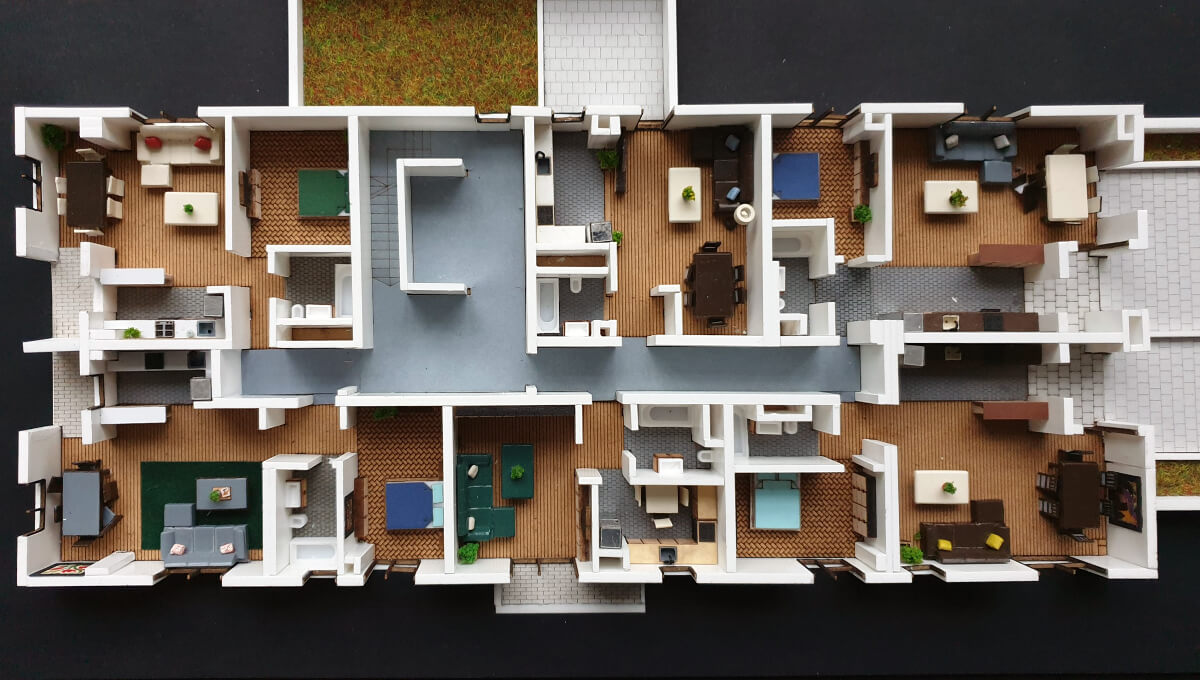
- Optimizing architectural flow: Seeing the entire floor plate allows designers to evaluate the efficiency of corridors, the placement of utility shafts, and the accessibility of common areas.
- The interplay of light and shadow: By placing a physical model under light sources that mimic the sun’s path, architects can test how natural light enters different units throughout the day. This helps in optimizing window placements and balcony depths to create more functional, energy-efficient spaces.
- Streamlined collaboration: In a project involving dozens of stakeholders—from structural engineers to interior designers—a 3D floor plan model provides a “single source of truth.” It eliminates ambiguity and ensures everyone is aligned on the project’s spatial constraints.
Building buyer confidence through transparency
For a potential buyer, purchasing an apartment “off-plan” can be a stressful experience filled with “what-ifs.” A floor plan model removes this uncertainty by providing a transparent, 360-degree view of their future environment.
When a client looks at a floor plan model, they aren’t just looking at walls; they are visualizing their daily routine. They can see exactly where their front door is located in relation to the elevators, how far they have to walk to the trash chute, and who their immediate neighbors will be. This level of detail builds an immediate sense of trust and helps the buyer feel “at home” long before the building is finished.

Key Benefits:
To summarize, integrating floor plan models into your development process offers a competitive edge through several key advantages:
- Accurate Spatial Orientation
Unlike a flat floor plan, a 3D model allows buyers to appreciate the true scale and volume of the space. It helps them understand the distance between units, the width of the hallways, and the overall density of the floor.
- Informed Decision-Making
If a buyer is hesitant about a specific unit—perhaps due to its proximity to the stairwell or a lack of morning sun—the floor plan model allows them to compare it instantly with other available units on the same floor. This flexibility speeds up the sales process.
- Error Reduction in Early Stages
Identifying a “dead zone” or an awkward corner in a physical model is far cheaper than fixing it during the construction phase. These models act as a final safety check for the architectural layout.
- Elevated Marketing Appeal
In a crowded real estate market, innovation stands out. A high-quality floor plan model in a sales gallery acts as a centerpiece, drawing people in and providing a tactile, interactive experience that digital images cannot replicate.
- Increased Customization Potential
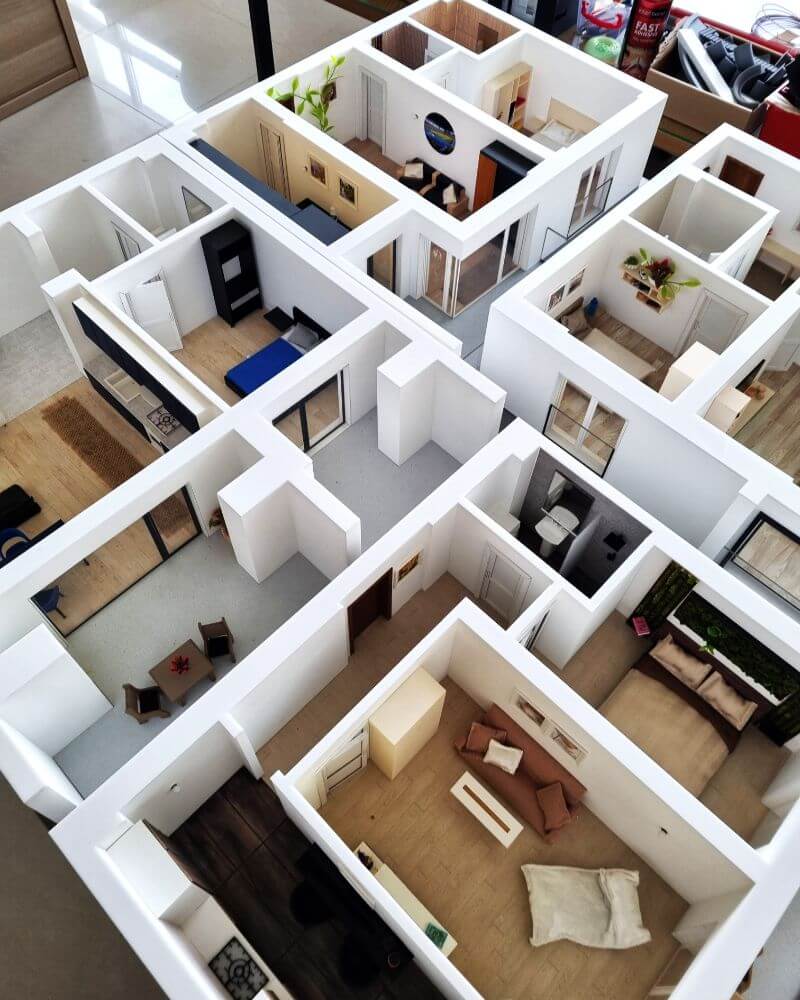
Floor plan models are more than just miniature replicas; they are sophisticated tools that facilitate communication, stimulate architectural innovation, and drive sales.
Ready to bring your architectural vision to life?

A floor plan model is more than a display it’s a powerful sales tool that bridges the gap between a blueprint and a closed deal. Contact our team today for a personalized consultation, and let’s discuss how our high-precision architectural models can elevate your next real estate project.
By offering a transparent and intuitive way to explore a building’s layout, developers can ensure that their projects not only meet technical standards but also exceed the expectations of the people who will eventually call them home.


