Project Description


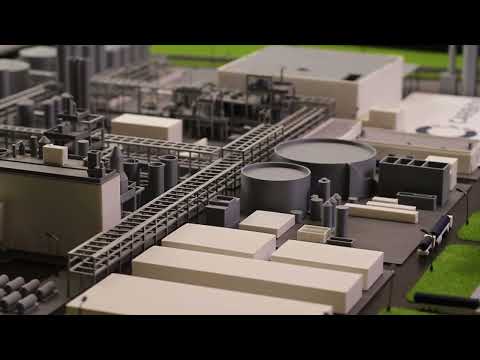


This architectural model represent an industrial facility, envisioned as a factory utilizing biological technologies for recycling plastic and textiles. The model depicts a large-scale, modern industrial complex with a strong focus on functionality and process flow.
The color palette is predominantly muted, featuring shades of light gray and white for the main structures, suggesting a clean, contemporary design typical of high-tech manufacturing or biotech facilities. The complex is set against a vibrant green base, simulating landscaping, with black sections representing roadways, parking lots, and operational areas.
The overall impression is one of a highly efficient, advanced facility. The design avoids the sprawling, haphazard look of older industrial complexes, instead showcasing a compact, logical arrangement tailored for a specific, complex process—the innovative upcycling of plastic and textiles using biotechnology.
The extensive pipework is a visual testament to the fluid and chemical processes at the heart of the biological recycling operation.
Carbios, a France-based company that uses biological technologies to recycle plastic and textiles, recently hosted a groundbreaking ceremony for its polyethylene terephthalate (PET) biorecycling plant in Longlaville, France. Carbios to build in France its first-of-a-kind manufacturing plant for fully bio-recycled PET in partnership with Indorama Ventures.
Unlike real estate mock-ups, industrial models are essential in the process of designing and optimizing industrial facilities, as they provide a very clear perspective on how they operate. Thus, engineers and designers use models to be able to evaluate the efficiency of processes, to plan the distribution of space and to identify potential problems before construction begins.